
Applied AI
MiroFish: Predicting the Future with 1M AI Agents
6 APR2026
9 MINRead
---
Views Sterlites
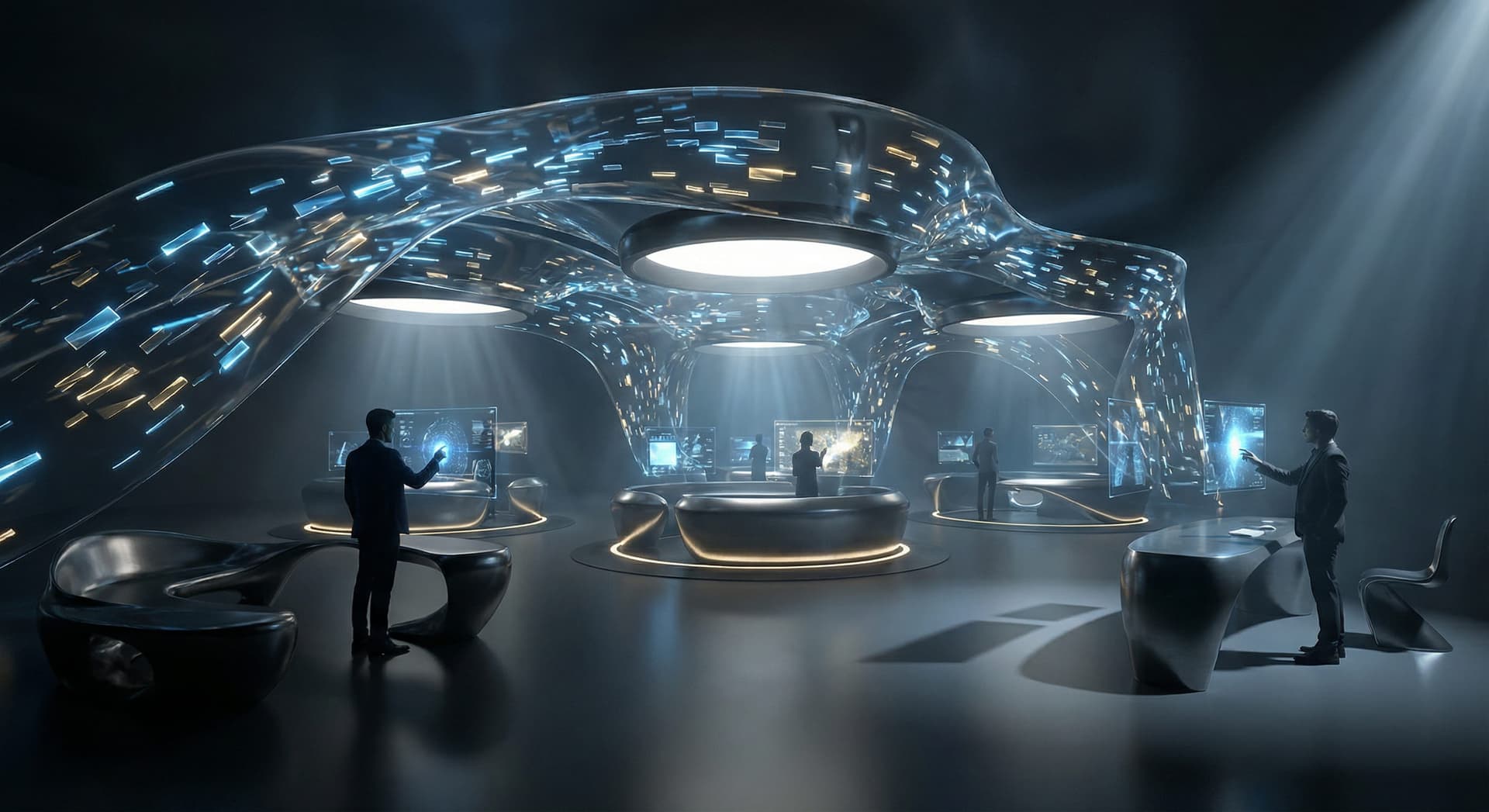
The Massive Open Online Course (MOOC) was a noble failure: a library of Alexandria that few bothered to read. While traditional online courses struggle with the “Ghost Town” problem (characterized by high attrition and passive video consumption), OpenMAIC offers a fundamental correction. It transforms a 50-page technical PDF into a fully interactive digital classroom in just 30 minutes for less than $2.
Think of a traditional MOOC like a recorded TV show: it plays exactly the same regardless of who’s watching. OpenMAIC is more like a live dinner party where the hosts and fellow guests are AI: they interact with you, challenge your views, and adapt the conversation to your level in real-time. This represents the transition from the Massive Open Online Course (MOOC) to the Massive AI-empowered Course (MAIC), a vision detailed by researchers at Tsinghua University in the Journal of Computer Science and Technology (JCST).
By the end of this guide, you’ll understand why the era of passive “watch-only” education has reached its conclusion and how agentic AI is rewriting the ROI of enterprise training.
OpenMAIC is the definitive end of the “play-and-pray” model of online education. It is an open-source platform that employs “agents” (software that acts with specific intent) to construct a virtual school around the learner. The classroom isn’t a place you go; it’s a software environment that builds itself around you.
Scenario: Imagine joining a roundtable debate where two AI agents argue opposing views of a corporate merger. You act as the moderator, guiding the discussion and synthesizing conclusions on a shared whiteboard while the AI teacher offers corrective feedback on your logic.
Multi-agent orchestration is the choreographic heart of the platform, functioning like a master conductor leading a complex orchestra. It ensures that every AI persona maintains its “Director Graph” (the specific script and behavioral logic that governs the classroom’s flow). This system simulates social complexity to drive “vicarious dialogue,” where a student learns by observing high-level interactions between others.
The virtual faculty utilizes three distinct roles:
Building an AI classroom is a structural process similar to house construction, moving from a skeletal blueprint to specific interior design. OpenMAIC utilizes a two-stage pipeline to ensure that educational content is both logical and engaging:
But how does a machine know when to stop lecturing and allow the student to intervene?
The Action Engine is the sensory nervous system of the classroom, coordinating every stroke, sound, and movement. It manages over 28 specific action types that give the virtual environment its physical presence. Beyond simple laser pointers and spotlights, the engine handles social nuances like the “Whisper” (classmate-to-classmate side-talk) and the “Hand Raise” (signaling a desire to interrupt).
For the executive, this engine is the key to efficiency. It creates “human-like” engagement without the exorbitant costs of professional video production or the latency of human editing. It turns the passive act of watching into an active state of participation.
At Sterlites, we believe the “Human-in-the-Loop” has shifted from human instruction to human curation. OpenMAIC proves that the bottleneck in education is no longer the availability of teachers, but the latency of content creation. The $2 classroom is the new global benchmark for democratizing elite-level knowledge transfer.
We define the Sterlites Social Cognition Flywheel as the process where AI-simulated peer interaction drives deep learner persistence. By facilitating “vicarious dialogue” (the academic term for learning through the observation of social exchange), the system counters the isolation inherent in digital platforms.
Preliminary trials at Tsinghua University across 500 students, drawing from 100,000 learning records, indicate that this multi-agent model successfully balances global scalability with the adaptivity of a private tutor.
OpenMAIC represents the shift from education as a product to education as a service. We aren’t just delivering content anymore; we are delivering an environment that thinks.
OpenMAIC is the bridge between static internal manuals and Project-Based Learning (PBL). It allows an enterprise to transform a technical guide into a role-playing simulation where a trainee leads an AI team through a high-stakes corporate challenge. This aligns with our broader vision for autonomous enterprise architectures.
Most corporate LMS platforms are “ghost towns” because they treat learning as a checkbox. OpenMAIC treats it as a collaborative event.
The era of passive, “watch-only” education has reached its conclusion. The future of enterprise training lies in the “Self-Correcting Classroom”: an environment that evolves in real-time as the learner demonstrates mastery.
The $2 classroom isn’t just a cost saving: it’s a fundamental reimagining of how intelligence is transferred across an organization.
Thinking about Applied AI? Our team has helped 100+ companies turn AI insight into production reality.
Book a highly tactical 30-minute strategy session. We apply the engineering rigor developed with McKinsey, DHL, and Walmart to accelerate AI for startups and enterprises alike. Let's bypass the hype, evaluate your specific use case, and map a concrete path to production.
Establish your authority. Amplify these insights with your professional network.
Hand-picked insights to expand your understanding of the evolving AI landscape.