Engineering
The Architecture of Agency: A 2026 Guide to Agentic Engineering
11 FEB2026
8 MINRead
---
Views Sterlites


Imagine handing your corporate credit card, master physical office keys, and root cloud terminal access to an eager junior engineer who executes ten thousand instructions per minute without taking a breath.
That is precisely what modern engineering teams are doing today under the banner of autonomous workflows.
Across modern enterprises, architects are celebrating how quickly autonomous software agents refactor legacy repositories, coordinate multi-step cloud deployments, and manage complex infrastructure tasks. Yet behind that operational euphoria lies a terrifying architectural blind spot: we are granting probabilistic language models direct operating system access, unmonitored egress routes, and long-lived credentials without enforcing basic kernel boundaries.
When an autonomous agent drops a production cluster or leaks sensitive tokens, dismissing the incident as an AI hallucination is an operational cop-out. The model did not fail; the architects who granted ambient credentials and uncontained network egress to a probabilistic loop failed. True system resilience demands that we constrain machine velocity with deterministic infrastructure.
In the world of generous token context windows and cheap model inference: with great power comes great abuse.
When an autonomous system misinterprets an instruction, deletes a primary database table, or exfiltrates confidential credentials, the immediate industry reflex is to shrug and label the disaster an unpredictable hallucination. That defense is an architectural cop-out. Systems do not fail in a vacuum; humans misconfigure them.
The true vulnerability is never the probabilistic model executing an instruction. The blame rests entirely on the human engineers who deployed autonomous loops without applying zero trust security principles or building runtime containment barriers.
At Sterlites, we view safe AI agents not as conversational novelties, but as high-velocity execution engines requiring rigorous hardware-level isolation.
Understanding the true fragility of autonomous systems starts with acknowledging our own historical track record. By the end of this guide, you will understand why human configuration mistakes are the root cause of automated failures, how machine speed multiplies point-in-time errors, and how to construct kernel-isolated runtimes that enforce absolute security boundaries.
Secure infrastructure is rarely dismantled by sophisticated zero-day exploits; it is routinely brought down by basic human configuration mistakes.
Think of system security configurations like the high-security deadbolt on an apartment door: an industrial-grade steel deadbolt is entirely useless if the resident leaves the spare key sitting in an unsealed envelope taped to the front porch. Long before artificial intelligence began executing code, human operators consistently proved that unchecked permissions, careless sharing habits, and long-lived credentials inevitably lead to disaster.
To understand why autonomous agents represent such an immediate hazard, we must examine how human operators mismanage static credentials and access policies in the real world.
In June 2023, security researchers at Wiz uncovered an astonishing data exposure originating from a public GitHub repository maintained by Microsoft’s AI research division.
The repository (robust-models-transfer) was intended to share open-source computer vision models, directing developers to download pre-trained weights from an Azure Storage URL.
However, a cascading series of basic human configuration errors converted a benign open-source project into a catastrophic data leak:
Think of an Azure SAS token with full control and a thirty-year expiration like a master brass key stamped with your company name: once left on a park bench, anyone can walk through your front doors for three decades without ever checking in at the front desk.
Cloud storage providers provide secure default configurations, yet human operational oversight routinely exposes sensitive enterprise datasets directly to the public web.
In 2017, cybersecurity research firm UpGuard identified an exposed Amazon Web Services (AWS) S3 bucket belonging to data analytics provider Alteryx.
The 36-gigabyte exposed database combined commercial intelligence from Experian with official data from the 2010 US Census. While names were omitted, the repository contained 248 profiling fields detailing 123 million American households, including residential addresses, estimated incomes, ethnic backgrounds, children in the household, and personal donation histories.
The access configuration was mismanaged to allow entry to any authenticated AWS user globally, confusing any AWS account holder with an authorized corporate user.
A year earlier in April 2016, security researcher Chris Vickery discovered an unprotected AWS database exposing 93.4 million registered voter records from Mexico’s National Electoral Institute (INE).
The publicly reachable instance exposed voter names, residential addresses, dates of birth, occupations, and national registration IDs directly to the public internet without requiring any authentication password whatsoever.
Catastrophic data leaks are not confined to complex cloud permissions; ordinary productivity conveniences combined with human haste can bypass high-stakes security perimeters.
During the November 2014 G20 Summit in Brisbane, an Australian Department of Immigration official prepared to distribute travel logistics to authorized agency personnel.
Instead of carefully verifying the address line, the official relied on Microsoft Outlook’s autofill feature. The application automatically completed the field with an unintended recipient, transmitting the confidential passport numbers, visa details, and dates of birth of 31 world leaders (including Barack Obama, Vladimir Putin, Angela Merkel, and Narendra Modi) directly to the local organizing committee of the Asian Cup football tournament.
Every historical exposure listed above resulted from human operational haste rather than software vulnerability exploitation. When autonomous AI agents inherit these exact operational environments, the identical human configuration mistakes recur at machine execution velocity.
If seasoned human engineers consistently make these catastrophic blunders when operating at biological speed, what happens when an autonomous algorithm begins executing instructions on their behalf?
When you analyze these historical failures, an unmistakable pattern emerges: human operators routinely struggle to maintain static credential hygiene, privilege boundaries, and access scopes.
Now, place an autonomous AI agent into that exact environment.
An autonomous AI agent is fundamentally an unvalidated dynamic execution engine. It digests ambiguous natural language prompts, formulates speculative plans, and executes shell scripts, SQL queries, REST invocations, and file system mutations using whatever ambient credentials its human deployer provided.
Think of an autonomous AI agent like a high-performance sports car equipped with automated cruise control: if the human driver points the vehicle toward an open cliff before switching on the cruise control, the car will not question the destination; it will accelerate toward the drop at maximum speed.
The defining danger of modern enterprise AI agent loops is the velocity differential between human error and automated execution.
A misconfigured Azure SAS token or an open S3 bucket is a static, passive error. The vulnerability sits idle until an external researcher or adversary uncovers it months or years later.
In sharp contrast, an autonomous AI agent operates dynamically at machine speed. It executes continuous programmatic loops, iterates over shell commands, fetches remote web dependencies, and writes to disk hundreds of times per minute.
If a human developer hands an autonomous agent an over-privileged service account key or unrestricted terminal access, that single static configuration mistake is multiplied dynamically across your entire cloud infrastructure within seconds.
When an autonomous agent issues a recursive deletion across a shared production volume, leaks sensitive database tables to a third-party logging endpoint, or imports an unvetted library carrying malicious pickle payloads, leadership often points to unpredictable model hallucinations.
That rationale is an absolute illusion.
You cannot blame a probabilistic token generator for executing instructions within the exact permission boundaries, runtime environment, and network routes you handed it. Accountability rests entirely with the engineering leadership who deployed high-velocity software without enforcing harness engineering guardrails and deterministic runtime isolation.
The root cause of every agentic disaster is not the artificial intelligence; it is the human operator who granted autonomous tools root permissions without building a containment fence.
Modern language models feature multi-million-token context windows and rock-bottom API costs, which lures developers into dangerous architectural habits.
To make agents appear hyper-capable, developers routinely dump raw environment variables, database connection strings, and administrative service account keys straight into the agent system prompt. By prioritizing rapid prototyping over least-privilege boundary controls, developers recreate the exact conditions of Microsoft’s 2051 SAS token leak, setting up their autonomous tools for immediate compromise.
Treating AI agent safety as a prompt engineering exercise is the single greatest architectural delusion of the modern cloud era. Prompts are probabilistic suggestions, not deterministic security barriers. True enterprise safety requires sandboxing AI execution at the Linux kernel boundary where physics, syscalls, and mathematics supersede natural language persuasion.
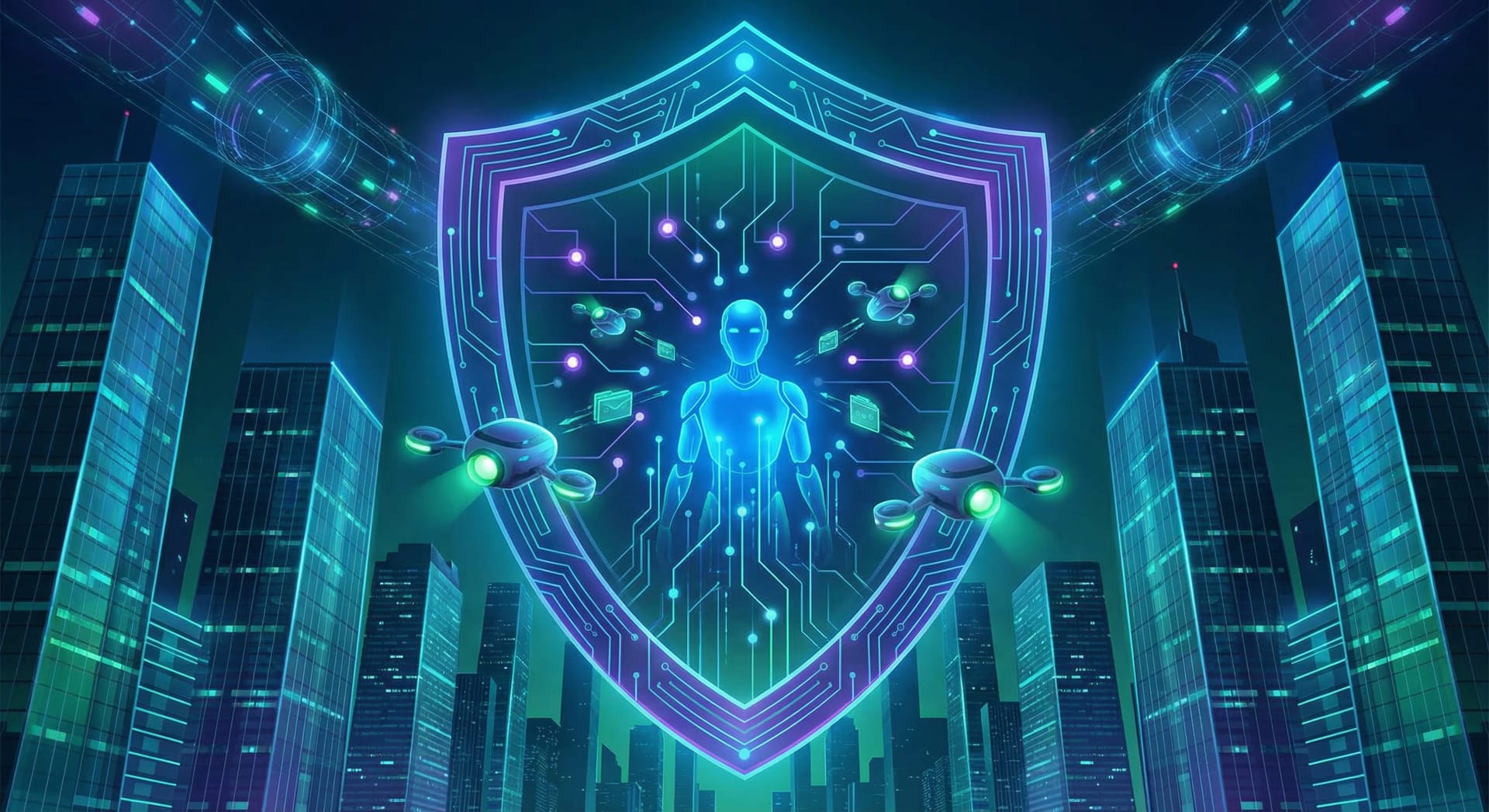
To establish verifiable control over autonomous systems, Sterlites developed a comprehensive governance model: The Sterlites Tri-Fenced Containment Architecture.
Think of this architecture like a three-tier containment system for handling dangerous chemical reactions: the physical flask (kernel isolation), the ventilation hood (network egress control), and the robotic dispenser (out-of-band credential injection). No matter how volatile the reaction becomes inside the flask, the fumes and chemicals cannot escape into the laboratory.
Sterlites helps enterprise architecture teams deploy safe AI agents by pairing NVIDIA OpenShell sandboxing with mathematically verified policy gateways.
To stop automated disasters, we must move past polite prompt instructions and enforce physical boundaries inside the operating system itself.
We cannot solve human configuration limitations by merely urging engineers to be more careful. Human vigilance does not scale; deterministic software architecture does.
To execute autonomous agents safely, we must enforce containment at the operating system layer. This is where NVIDIA OpenShell, a cornerstone of the NVIDIA Open Agent Safety Platform, becomes an indispensable security foundation.
OpenShell establishes an isolated runtime environment that governs autonomous agent actions through least-privilege kernel mechanisms, complete network fence containment, out-of-band credential injection, and formally verified policy compilation.
Think of NVIDIA OpenShell like an ultra-secure chemistry cleanroom: the researcher manipulates dangerous compounds through sealed mechanical gloves behind reinforced blast glass, preventing hazardous materials from ever contacting the outside atmosphere.
NVIDIA OpenShell encloses untrusted AI agent execution within a hardened sandbox boundary utilizing native Linux primitives:
The fatal flaw of conventional agent runtimes is storing live API keys and tokens directly inside the agent’s memory or environment variables. OpenShell eliminates raw credential exposure through a strict division of responsibility:
To prevent human configuration mistakes (such as granting blanket storage access or generating thirty-year expiration windows) from slipping into production, OpenShell applies formal verification to policy lifecycles.
OpenShell integrates a mathematical Policy Prover into its control plane and provides a standalone command-line utility (openshell-prover) for continuous integration pipelines.
Before any policy update is applied to an active sandbox, openshell-prover analyzes the proposed rule definitions mathematically. If a developer accidentally introduces a rule granting wildcard permissions, opening unvetted HTTP methods, or exposing cloud metadata services, the Policy Prover blocks the commit automatically, mandating manual security sign-off.
Consider a Tier-1 financial institution deploying an autonomous code-refactoring agent across enterprise repositories. In a standard setup, the agent runs with ambient GitHub personal access tokens and open internet access to resolve third-party packages. Under the Sterlites containment model, the agent executes within an OpenShell sandbox with zero network egress, unable to contact the public internet or cloud metadata services. When the agent attempts to fetch an internal proprietary utility, the OpenShell supervisor verifies the target URL against a signed policy manifest, injects an ephemeral token out-of-band, and proxies only the validated payload.
Most teams attempt to enforce agent security using natural language prompts or post-generation output regex filters. Attackers routinely bypass these superficial filters using multi-turn prompt injection or linguistic obfuscation. If your security controls do not reside at the operating system kernel and network transport layers, your autonomous agent is uncontained.
Engineering safe AI agents requires abandoning the belief that model alignment can replace kernel-level access controls, a core philosophy embedded across every Sterlites deployment.
By mapping common agent vulnerabilities directly to deterministic operating system primitives, OpenShell transforms probabilistic agent execution into a predictable, mathematically bounded workload.
By integrating these controls into your enterprise agentic architecture, organizations can safely reap the productivity benefits of autonomous agents without assuming existential security risks.
Autonomous software agents represent a generational leap in software engineering and enterprise efficiency. The ability to delegate multi-tier API orchestration, infrastructure optimization, and code refactoring to intelligent systems is rapidly transforming digital business.
However, developer excitement cannot supersede foundational security engineering.
Over the next six to twelve months, enterprises that deploy unchecked autonomy will face unprecedented data breaches and operational outages caused not by malicious artificial superintelligence, but by simple, amplified human configuration errors. Organizations that succeed in orchestrating autonomous enterprise workflows will be those that treat containment as a first-class architectural requirement.
To build an autonomous architecture that endures, implement these three non-negotiable principles today:
Before launching your next autonomous agent pipeline, conduct a rigorous architectural audit of your credential scopes and execution boundaries.
Thinking about AI Security? Our team has helped 100+ companies turn AI insight into production reality.
Book a highly tactical 30-minute strategy session. We apply the engineering rigor developed with McKinsey, DHL, and Walmart to accelerate AI for startups and enterprises alike. Let's bypass the hype, evaluate your specific use case, and map a concrete path to production.
Establish your authority. Amplify these insights with your professional network.
Hand-picked insights to expand your understanding of the evolving AI landscape.