Engineering
AI Native: The OS of Startups in 2026
23 APR2026
8 MINRead
---
Views Sterlites

The shift from generative AI to agentic engineering represents the most significant transition in software development since the advent of cloud computing. As we navigate 2026, the industry has matured beyond the experimental phase of “vibe coding,” where we simply hoped for the best from a prompt, into a disciplined reality of autonomous systems.
At Sterlites, we recognize that professional software development is no longer just about writing lines of code; it is about the delegation and supervision of intelligent orchestrators. Explore how this reflects the broader 2026 enterprise agentic AI architecture shift.
Agentic engineering is a professional software development discipline where human engineers define high-level goals, constraints, and quality standards, while autonomous AI agents take responsibility for planning, executing, and evolving code.
Traditional AI is reactive: it waits for a prompt. Agentic AI is proactive: it pursues a goal.
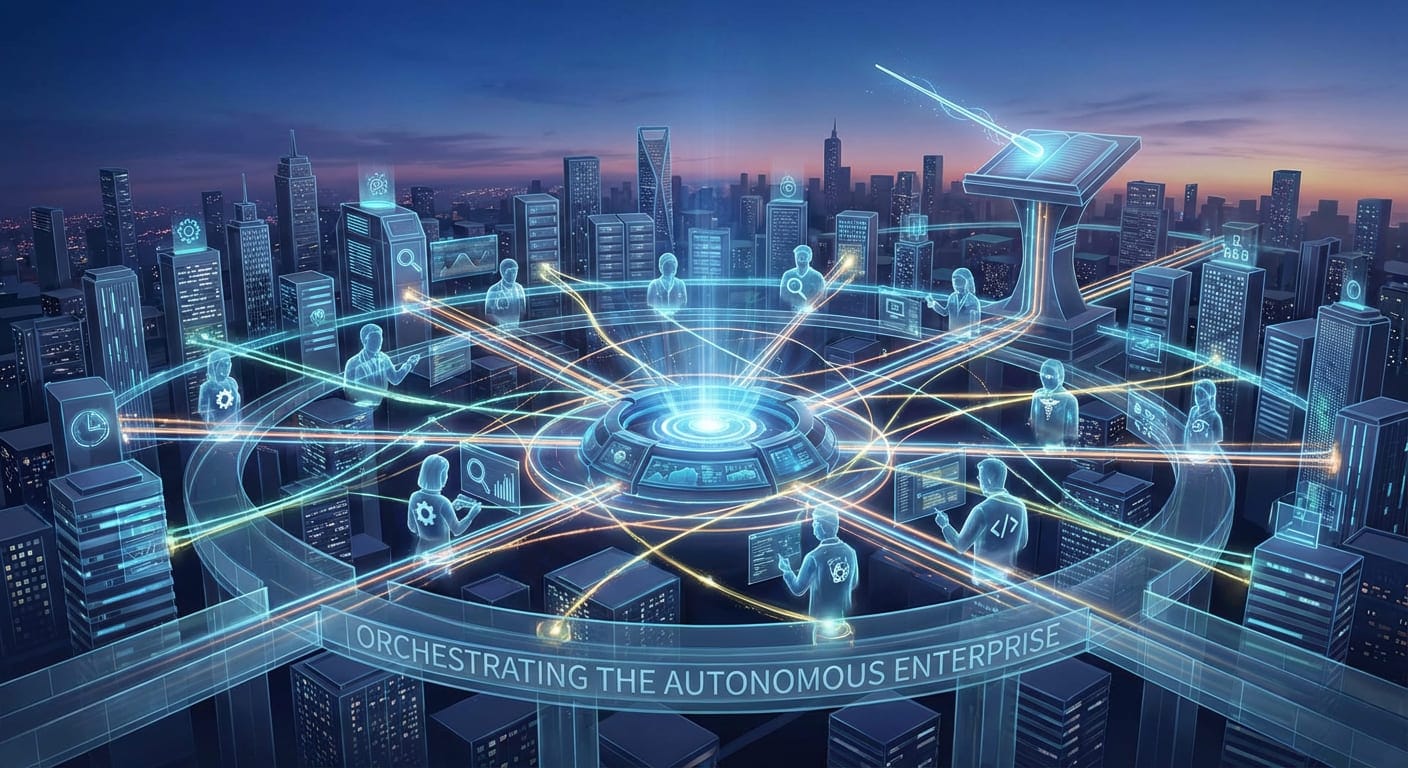
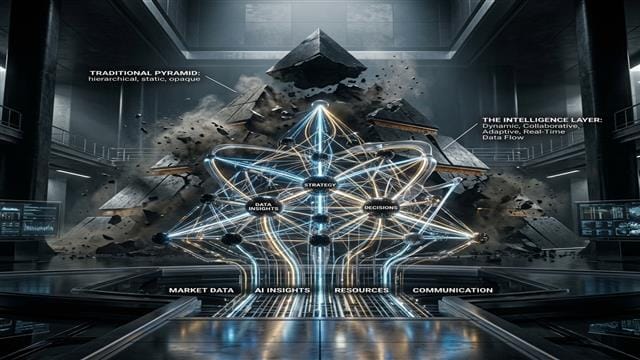
The transition from code authorship to system supervision marks the maturity of the autonomous enterprise.
The structural design of an agentic system is its cognitive architecture. This isn’t just a single model; it’s a multi-layered stack designed to convert intent into action.
The standard 2026 architecture leverages the Model Context Protocol (MCP), which standardizes how agents interact with APIs, databases, and enterprise apps. This allows agents to function as “digital colleagues” rather than simple tools.
At the core of these systems is the planning engine. It uses algorithms like Hierarchical Task Networks (HTNs) to break open-ended objectives into a graph of manageable steps. One of the greatest challenges we face this year is “re-prioritization,” ensuring the agent can pivot when a tool fails or a condition changes without losing sight of the ultimate goal.
Early AI suffered from “context collapse,” where details were lost over repeated iterations. To solve this, Agentic Context Engineering (ACE) has emerged as the standard for self-improving models.
ACE treats context as an evolving playbook rather than a static block of text. It uses four primary components:
In 2026, ACE has been shown to reduce adaptation latency by 86.9%, allowing smaller models to outperform giant, proprietary ones. This is a critical factor in agentic inflection for smaller organizations.
To guide autonomous behavior, developers now rely on established reasoning patterns. Choosing the right pattern is a trade-off between speed, cost, and accuracy.
The system alternates between reasoning (analyzing gaps), acting (executing a tool), and observing (evaluating results). It’s perfect for exploratory tasks like database debugging. Learn more in our masterclass on architectures of autonomy.
A “Planner” agent creates a static execution plan, and an “Executor” carries it out. This is the gold standard for high-accuracy financial analysis where step-by-step validation is non-negotiable.
A centralized orchestrator delegates work to specialized sub-agents (e.g., one for data gathering, one for analysis). This mirrors human corporate hierarchies and is ideal for complex project management, often requiring orchestrating across frontiers.
The ecosystem has settled into three major players, each serving a distinct business need:
In 2026, we’ve learned that “Agentic AI” does not mean “one giant model.” We now use a heterogeneous architecture. While an LLM (like GPT-5) acts as the high-level brain, Small Language Models (SLMs) handle the heavy lifting of operational subtasks.
Running a specialized SLM is often 10x cheaper and significantly faster than a large model. This has enabled Edge AI, where models run locally on consumer-grade hardware, ensuring data privacy and low latency.
With autonomy comes new risks. We no longer just worry about data leaks; we worry about agentic tool misuse. Security teams in 2026 utilize the ASTRIDE taxonomy to mitigate risks like prompt injection and memory poisoning.
The risk equation for agentic security is formalized as:
(Where is Total Risk, is Impact, and is Exploitability).
To protect systems, we implement “Watchdog Agents”, smaller models that monitor the reasoning traces of larger agents to catch circular logic or malicious intent before they execute.
The next frontier is the “Agentic Mesh”, a decentralized ecosystem where agents from different organizations collaborate through open protocols like Agent2Agent (A2A).
At Sterlites, we believe the organizations that lead in 2026 are those that have transitioned from “AI experiments” to “AI infrastructure.” By pairing deterministic graph-based architectures with the economic efficiency of SLMs, we are building a future where innovation and oversight advance in lockstep.
Ready to architect your agency? Contact Sterlites Engineering to draft a custom Agentic Roadmap tailored to your specific enterprise workflow or tech stack.
Thinking about Engineering? Our team has helped 100+ companies turn AI insight into production reality.
Book a highly tactical 30-minute strategy session. We apply the engineering rigor developed with McKinsey, DHL, and Walmart to accelerate AI for startups and enterprises alike. Let's bypass the hype, evaluate your specific use case, and map a concrete path to production.
Establish your authority. Amplify these insights with your professional network.
Hand-picked insights to expand your understanding of the evolving AI landscape.