
Technology
JEPA vs LLMs: The Architecture War That Will Define the Next Decade of AI
22 APR2026
10 MINRead
---
Views Sterlites
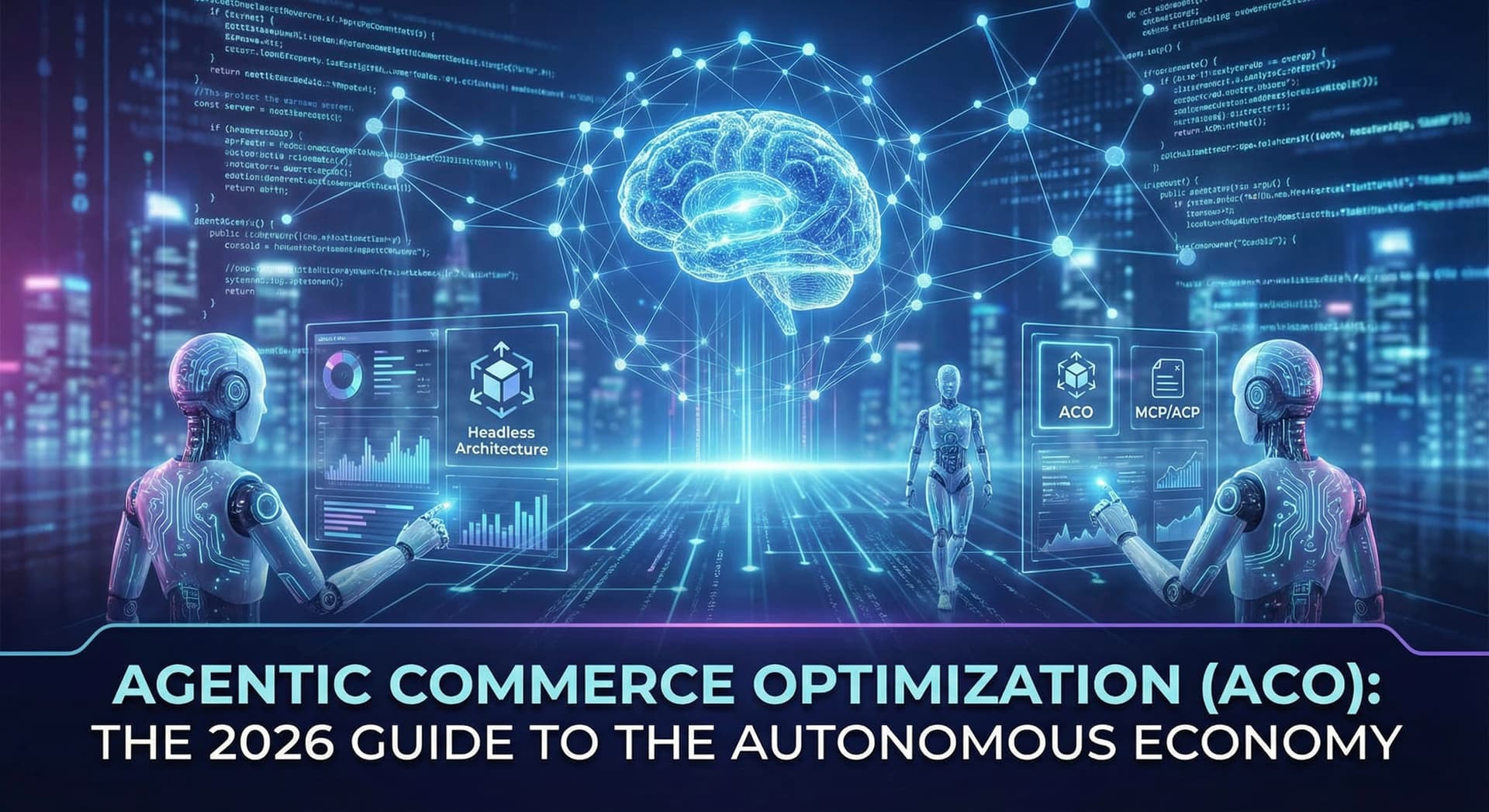
The global commercial landscape is undergoing a structural transformation: the transition from human-centric digital interfaces to autonomous agent-mediated ecosystems. This shift, termed Agentic Commerce (or a-Commerce), represents a paradigm where artificial intelligence programs perform multi-step workflows, from product discovery and negotiation to transaction fulfillment, without constant human intervention.
By 2030, projections suggest that 25% of global e-commerce sales will be enabled by these autonomous systems. This signals a massive inversion of traditional marketing models, moving away from emotional appeal and visual persuasion toward data-driven logic.
At the heart of this shift is Agentic Commerce Optimization (ACO): the strategic framework for preparing digital assets, product catalogs, and transactional infrastructures to be discovered and acted upon by machine agents rather than human browsers.
The distinction between current e-commerce and agentic commerce is conceptual: the consumer’s role shifts from an executor of tasks to a strategist of outcomes. Unlike traditional chatbots that wait for prompts, these new agents possess the capability to reason, plan, and adapt to changing market conditions, such as price fluctuations or inventory availability, in real-time.
The ecosystem is built on three primary interaction models:
These models represent the evolution from manual browsing to fully automated negotiation and fulfillment.
For merchants, the transition to agentic readiness necessitates a “headless” commerce architecture. If a merchant’s catalog is not accessible through clean, machine-readable APIs, it remains effectively invisible to the agentic economy.
Furthermore, technical performance metrics must be recalibrated. Agents operate at machine speeds; traditional web metrics are insufficient. Agents may require API responses within 200 milliseconds to maintain efficient multi-step workflows.
Mastering Agentic Commerce Optimization (ACO) requires a shift from human-centric signals (layout, copy) to machine-centric signals (metadata, latency).
The core of ACO is machine readability. Optimization involves implementing comprehensive Schema.org markups (particularly JSON-LD) and standardizing unique identifiers like SKU, GTIN, and MPN. Inconsistent metadata weakens the “trust” an agent has in the data, often leading to exclusion.
Also known as Answer Engine Optimization (AEO), this focuses on the discovery phase. Agents rely on authoritative third-party sources to “ground” their recommendations. Brands must monitor their “AI Share of Voice” and ensure their product information is reflected accurately across platforms like ChatGPT, Gemini, and Perplexity.
Without standards, the ecosystem would fragment. A race is on to define how agents communicate and transact.
Introduced by Anthropic, MCP serves as a universal adapter. It standardizes how agents connect to external tools, simplifying integrations from an problem to an architecture.
Co-developed by OpenAI and Stripe, ACP defines the logic for machine-to-machine purchases. It powers features like “Instant Checkout,” allowing users to buy directly from chat interfaces while the merchant remains the “merchant of record.”
We are moving from “Know Your Customer” to “Know Your Agent.” New frameworks like Human-Agent Binding use biometrics to create an unbreakable link between a human and their AI proxy.
In B2B, agentic tools excel at automating the intake of purchase orders (POs) and handling complex spec comparisons, allowing brands to serve long-tail accounts without dedicated sales reps.
Agentic commerce marks a structural shift in how growth happens. We are moving from the era of “Search” to the era of “Selection.”
For CEOs and boards, the mandate is clear: modernize infrastructure now or risk ceding market share to faster, automated competitors. The winners will be those who establish themselves as trusted, agent-discoverable, and programmatically accessible entities.
”By 2030, if your brand isn’t optimized for agents, it is effectively invisible. The transition from SEO to ACO is the most significant retail transformation since the advent of e-commerce.”
Thinking about Technology? Our team has helped 100+ companies turn AI insight into production reality.
Book a highly tactical 30-minute strategy session. We apply the engineering rigor developed with McKinsey, DHL, and Walmart to accelerate AI for startups and enterprises alike. Let's bypass the hype, evaluate your specific use case, and map a concrete path to production.
Establish your authority. Amplify these insights with your professional network.
Hand-picked insights to expand your understanding of the evolving AI landscape.