Technology
JEPA vs LLMs: The Architecture War That Will Define the Next Decade of AI
22 APR2026
10 MINRead
---
Views Sterlites
Expanded FAQ section to address key differences between World Models and LLMs, as well as current technical limitations, optimizing for Answer Engine Discovery.
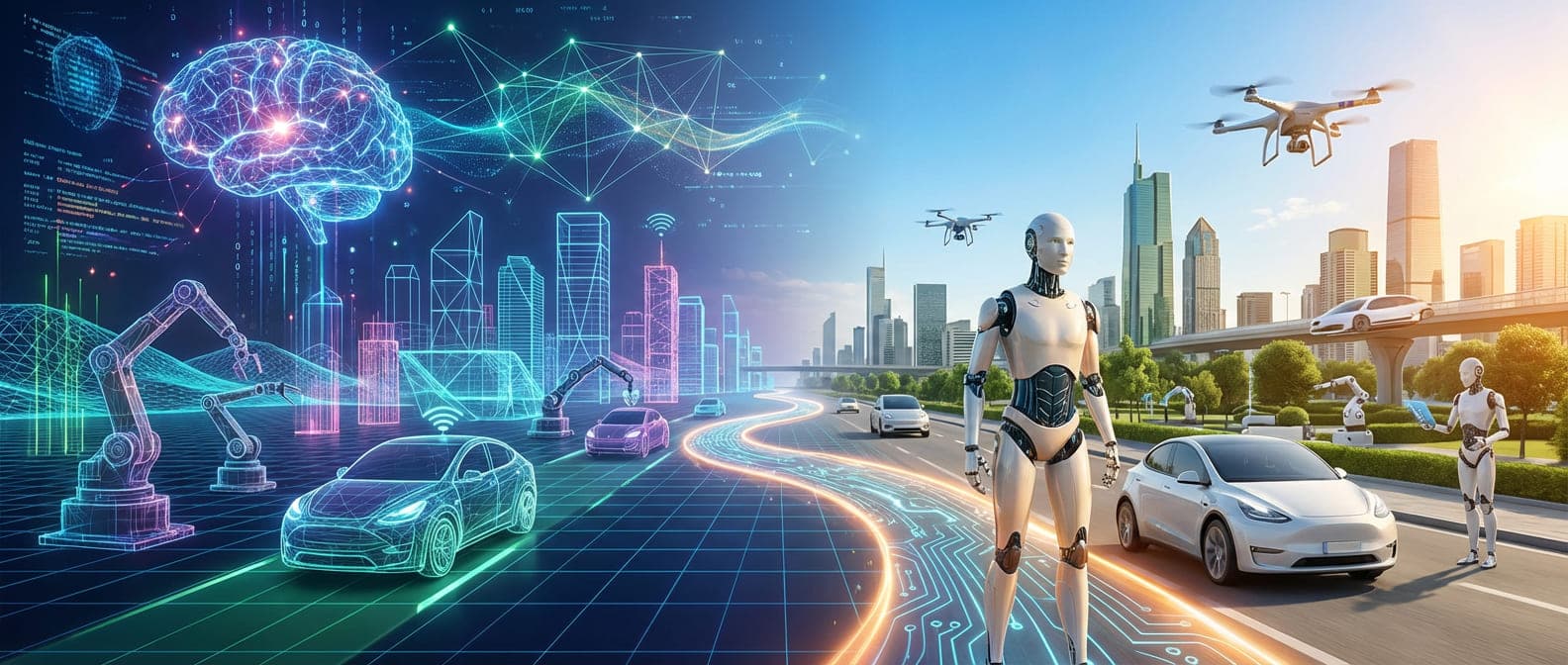
The evolution of artificial intelligence has reached a critical juncture in early 2026, characterized by a fundamental transition from the statistical manipulation of linguistic tokens to the sophisticated simulation of physical reality.
While the previous half-decade was dominated by the scaling of large language models (LLMs), the limitations of these systems have become increasingly apparent in domains requiring spatial intelligence, temporal reasoning, and causal understanding.
Large language models are prisoners of the digital text on which they were trained. They lack a grounded understanding of how the physical world evolves over time.
This deficiency has catalyzed the rise of world models: generative neural networks that learn internal representations of environments to imagine and explore sequences of actions internally before executing them in the real world.
This masterclass explores the history, architectural components, learning paradigms, and industrial applications of world models, positioning them as the essential cognitive substrate for the next generation of embodied AI and autonomous systems.
The concept of a world model is not a modern invention but a realization of cognitive theories dating back nearly a century. The intellectual lineage can be traced to Kenneth Craik’s 1943 publication on mental models, which hypothesized that the human brain constructs a small-scale model of reality to test hypotheses and predict the future.
This theoretical framework was expanded in the 1960s with the “blocks world” of SHRDLU and refined in 1971 by Jay Wright Forrester, the pioneer of system dynamics, who described mental models as internal images consisting of selected concepts and the relationships between them.
In 1974, Marvin Minsky’s “frame representation” provided a structured way to organize world knowledge, laying the groundwork for how modern AI systems categorize spatial and temporal data.
The modern technical definition of a neural world model was solidified in 2018 by David Ha and Jürgen Schmidhuber, who framed it as a modular system capable of learning compressed spatial and temporal representations of popular reinforcement learning environments in an unsupervised manner.
Their pioneering work demonstrated that an agent could be trained entirely inside its own “dream environment,” a generated simulation of reality, and successfully transfer that learned behavior back to the actual environment.
As of 2026, this concept has evolved from simple racing simulators to “general-purpose world simulators” capable of modeling complex 4D environments, where the fourth dimension (time) is integrated with three-dimensional spatial data to provide a unified understanding of consistency, object permanence, and physical dynamics.
The trajectory shows a clear pattern: from symbolic representations to neural compression, and from single-domain simulators to general-purpose reality engines.
The standard architecture of a world model consists of three primary modules that interact to perceive, remember, and decide. This modularity allows the system to compress the vast amount of sensory information it receives into a manageable “latent space,” which acts as a mental map for reasoning through complex scenarios.
The role of the Vision Module is to take high-dimensional inputs, such as raw pixel data from cameras, and compress them into a small representative code, often denoted as a latent vector z.
This is typically achieved using a Variational Autoencoder (VAE) or a masked autoencoder. By training on thousands of frames, the module learns to extract the most critical features of a scene while discarding task-irrelevant noise, such as the exact texture of a leaf or the specific ripples on water.
This compression is essential because it allows the subsequent modules to operate on a highly efficient representation of reality rather than being overwhelmed by raw sensory data.
The Memory Module is responsible for predicting the future state of the world based on the current latent representation and the agent’s actions. Most modern world models utilize a Recurrent Neural Network (RNN), specifically a Recurrent State-Space Model (RSSM), to maintain a memory of past events.
This module learns a transition function that maps the current state z(t) and action a(t) to the next state z(t+1). In more advanced versions, such as the MDN-RNN, the model outputs a probability distribution over several possible future states, allowing the agent to account for the inherent stochasticity of the world, where a single action might lead to multiple possible outcomes.
The Controller is the simplest component of the triad, responsible for determining the actions that will maximize the expected cumulative reward.
Because the complexity of the world is already encoded in the V and M modules, the Controller can be a compact linear model or a simple policy trained via reinforcement learning. During the training phase, the agent can use its internal world model to conduct “thought experiments,” simulating thousands of potential action sequences and evaluating their outcomes without needing to perform them in the real world.
This capability is what allows world-model-based agents to be significantly more data-efficient than traditional model-free reinforcement learning algorithms.
The technical landscape of 2026 is defined by a competition between two dominant generative paradigms: autoregressive modeling and diffusion modeling. Each offers distinct advantages for world simulation, and their integration is currently a major focus of high-end research.
Autoregressive models, such as DeepMind’s Genie 2 and the AdaWorld framework, generate video or latent states frame-by-frame, with each prediction conditioned on all previous steps. This approach is natively aligned with the sequential nature of time and the causal structure of physical reality.
Autoregressive models often suffer from quality degradation over long sequences due to error accumulation, where a small mistake in frame 10 becomes a major distortion by frame 1000.
To mitigate this, models like AdaWorld have introduced self-supervised latent action extraction. By learning the critical transitions between frames without requiring expensive human-labeled action data, AdaWorld enables efficient adaptation to new environments where the action space might be unknown.
Diffusion models, most notably OpenAI’s Sora and Runway’s GWM-1 Worlds, have revolutionized the visual fidelity of world simulators. These models work by gradually removing noise from a signal to generate realistic video frames.
Sora 2, released in late 2025, utilizes “space-time tokens”: patches of video that allow the model to maintain object permanence and consistent lighting over longer horizons than previous architectures.
Unlike autoregressive models that generate token by token, diffusion models can refine entire spans of video simultaneously, leading to a more coherent global world state. However, they traditionally struggle with modeling per-timestep local distributions, which is why hybrid models like Epona have emerged.
The competition between these paradigms is not winner-take-all. Production systems increasingly combine multiple approaches based on task requirements.
One of the most significant theoretical debates in 2026—the JEPA vs LLM war—centers on the necessity of generating pixels. Yann LeCun, the former Meta chief AI scientist, has been a vocal critic of “generative” world models like Sora, arguing that the pursuit of pixel-perfect video is a “losing proposition” if the goal is to understand world dynamics.
Instead, he advocates for the Joint Embedding Predictive Architecture (JEPA), which aims to predict high-level representations in an abstract embedding space.
JEPA represents a fundamental shift in self-supervised learning. Traditional generative models waste immense computational power trying to predict every detail of a scene, including unpredictable elements like the rustling of leaves or the exact pattern of ripples on a pond.
In contrast, JEPA focuses on predicting the “essence” or high-level representation of the target. It is formulated as an energy-based model where the “energy” corresponds to the prediction error between the context and target representations. By minimizing this energy, the model learns foundational concepts like object permanence, gravity, and motion trajectories without the burden of rendering pixels.
VL-JEPA extends this architecture into the vision-language domain. Unlike classical vision-language models that generate tokens autoregressively, VL-JEPA predicts continuous embeddings of target texts. This non-autoregressive nature allows for “selective decoding,” where the model only performs decoding operations when a significant change occurs in the predicted embedding stream.
This delivers substantial inference-time efficiency, up to 2.85x faster than traditional models, making it ideal for real-time applications like live action tracking in wearable devices or planning in robots.
A primary application of world models is in robotics, where they serve as the bridge between simulation and the real world. The “sim-to-real gap”, the discrepancy between an agent’s performance in a digital environment and its performance in reality, remains one of the most pressing challenges in the field.
To overcome the reality gap, researchers employ techniques like domain randomization, where physical parameters such as friction, mass, and lighting are varied during training. This forces the world model to learn a policy that is robust to the specific inaccuracies of any single simulation.
Additionally, system identification (Sys-ID) is used to match the mathematical abstractions of the simulation to the physical mechanism of the robot, accounting for latency, control frequency, and actuation delay.
When the discrepancies between the simulated model and the real world are too large to be solved by parameter tuning alone, learned residual models are deployed. These models learn to modify the outputs of an imperfect world model so that the composite dynamics accurately reflect real-world observations.
Furthermore, the creation of high-quality “digital twins” using techniques like 3D Gaussian Splatting and NeRF allows for the generation of simulation environments that faithfully mirror their real-world counterparts. This Real2Sim2Real pipeline enables the safe and scalable development of robust control policies.
The release of OpenAI’s Sora 2 in September 2025 is widely considered the “GPT-3.5 moment” for video generation and world simulation. While the original Sora demonstrated that behaviors like object permanence could emerge from scaling compute, Sora 2 represents a leap forward in the understanding of physical laws such as buoyancy, rigidity, and the dynamics of complex human motion.
Sora 2 is capable of simulating scenarios that were previously impossible for AI, such as an Olympic gymnastics routine or a cat performing a triple axel.
Crucially, the model demonstrates an understanding of failure: if a basketball player misses a shot, the ball rebounds off the rim according to the laws of physics rather than teleporting through the hoop as seen in earlier models. This level of physical accuracy transforms Sora from a creative tool into a world simulator that could potentially be used to run scientific experiments or train robotic agents in virtual environments.
One of the most innovative features of Sora 2 is its ability to follow intricate instructions spanning multiple shots while accurately persisting the world state. Users can guide the video via “instructable feeds,” tweaking visual preferences in plain language as the video renders.
OpenAI’s vision for these systems goes beyond video generation; they view world simulators as a necessary step toward Artificial General Intelligence (AGI), providing the spatial-temporal memory that current LLMs lack.
The automotive sector in 2026 has hit an inflection point, with world models enabling the transition from Level 2 driver assistance to Level 4 fully autonomous systems.
At CES 2026, NVIDIA introduced Alpamayo, a world foundation model designed specifically for autonomous vehicles. By leveraging open physical and simulated datasets, automakers like Mercedes-Benz and Lucid are using Alpamayo to more quickly build systems that can handle the “long-tail” of potential driving scenarios: rare events like extreme weather or unusual pedestrian behaviors that are difficult to program manually.
Several automakers have highlighted progress toward Level 4 systems, where the vehicle is capable of driving itself without human monitoring in certain conditions, with commercial launches expected by late 2026.
The application of world models is expanding beyond passenger cars:
John Deere’s X9 combine harvester utilizes predictive ground speed automation, using a tech stack that integrates satellite imagery and cameras to monitor crops and auto-adjust speed. This system boosts harvesting efficiency by up to 20%.
Universal Robots predicts that the next leap will come from “predictive math”: mathematical techniques like dual numbers and jets that allow robots to forecast how their movements will ripple through an entire factory environment, moving from reactive to anticipatory behavior.
As world models become more pervasive, researchers are focusing on the deeper philosophical and mathematical questions that underpin an agent’s understanding of reality.
A central challenge in model-based reinforcement learning is “causal confounding,” where a world model learns observational correlations rather than the interventional distributions needed for robust planning.
For example, a robot might learn that moving its arm causes its shadow to move, but it must also understand that moving its shadow will not cause its arm to move.
The Causal Disentanglement World Model (CDWM) addresses this by decomposing state transitions into an “Environment Pathway” (uncontrollable dynamics) and an “Intervention Pathway” (agent-induced dynamics). This identifies the “Total Causal Effect” (TCE), which can be used as an “Agency Bonus”: an intrinsic reward that guides the agent to explore actions that have a high causal impact on the environment.
The shift from deterministic computing to probabilistic AI is forcing a change in how engineers and workers interact with software: a shift toward the “stochastic mindset.”
In world models, this manifests as the move away from predicting a single future state toward predicting a probability distribution of outcomes. Probabilistic world models are more efficient at a high level of scale because they embrace the inherent randomness of the 21st-century world, allowing for better decision-making among complex, uncertain offerings.
Maintaining consistency over long periods remains a bottleneck. New models like VideoLLaMB and TimeExpert use recurrent memory bridges and Mixture-of-Experts (MoE) architectures to achieve temporal grounding over hours of video.
These systems are no longer just captioning clips; they are performing “summarization and analysis” to answer complex questions like:
For practitioners aiming to master world models in 2026, a structured learning path is essential. The field has moved so quickly that traditional computer vision roadmaps must be augmented with reinforcement learning and generative modeling.
A curriculum proposed for 2026 practitioners divides the journey into four phases:
Week 1: Foundations of Latent Imagination
Week 2: Systems and Scaling
Week 3: Foundation World Models
Week 4: Deployment and Safety
World models are the lynchpin of modern artificial intelligence. By moving beyond the limitations of text-based prediction, these models have enabled a new era of “spatial intelligence” that connects visual perception, robotics, and complex reasoning.
We are witnessing the birth of general-purpose world simulators that do not just generate images but understand the underlying physical, spatial, and causal relationships of the environment.
As prominent researchers like Fei-Fei Li and Yann LeCun continue to shift their focus toward these technologies, world models are emerging as the most critical advancement needed to move AI from mere pattern prediction to genuine understanding.
Key Takeaways:
From Tokens to Reality: World models represent the transition from statistical text manipulation to genuine physical reasoning.
The V-M-C Architecture: Vision, Memory, and Controller modules work together to enable “imagination” before execution.
JEPA is the Future: Predicting in abstract embedding space is more efficient and robust than pixel-level generation, provided one accounts for representation collapse.
Whether in the form of autonomous humanoid robots navigating our homes, self-driving cars predicting rare edge cases on our streets, or immersive virtual worlds that behave with perfect physical consistency, the world model is the architecture that allows AI to inhabit, reason about, and improve our reality.
The journey toward Artificial General Intelligence is no longer just a digital endeavor; it is a physical one, grounded in the predictive power of the world model.
Thinking about Technology? Our team has helped 100+ companies turn AI insight into production reality.
Book a highly tactical 30-minute strategy session. We apply the engineering rigor developed with McKinsey, DHL, and Walmart to accelerate AI for startups and enterprises alike. Let's bypass the hype, evaluate your specific use case, and map a concrete path to production.
Establish your authority. Amplify these insights with your professional network.
Hand-picked insights to expand your understanding of the evolving AI landscape.