AI & Technology
Gemma 4: The 31B Model Outthinking AI 20x Its Size
11 APR2026
10 MINRead
---
Views Sterlites
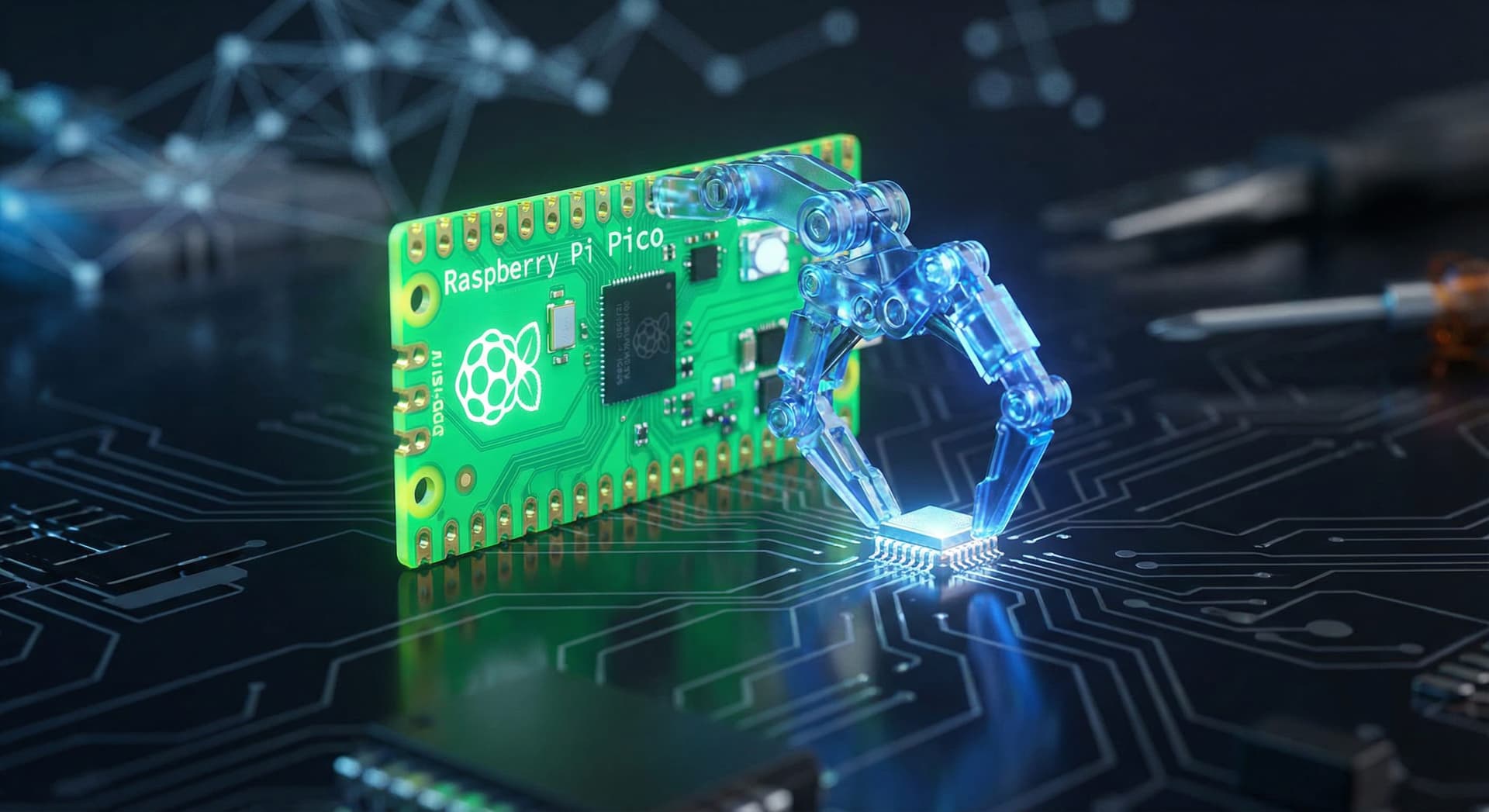
Refined the analysis to focus exclusively on software-driven Agentic Autonomy. Removed hardware rover and molecular nanobotics sections to maintain a tight focus on the OpenClaw, PicoClaw, and HKUDS Nanobot ecosystems. Added technical specifications for physical OpenClaw grippers and security hardening strategies (PASB).
The global transition toward decentralized artificial intelligence in early 2026 has been characterized by the move from passive linguistic models to proactive, autonomous agents capable of independent task execution across digital and physical domains. This shift, colloquially termed the agentic revolution, represents a fundamental restructuring of the human-computer relationship.
At the center of this metamorphosis are three distinct but conceptually intertwined frameworks: OpenClaw, PicoClaw, and Nanobot. While these terms describe a range of technologies: from high-privilege software assistants to 3D-printable robotic grippers; they collectively illustrate an industry-wide prioritization of agency, privacy, and computational efficiency. The development of these systems signifies a pivot toward localized intelligence: a movement defined by the philosophy that an individual’s assistant should reside on their own hardware, operating under their specific rules and maintaining their private context.
OpenClaw has emerged as the most significant development in personal AI since the public introduction of large language models in late 2022. The project’s rapid growth on GitHub, which saw it amass over 145,000 stars and 20,000 forks in less than two months, reflects a deep-seated demand for autonomous tools that “actually do things” rather than simply generating text.
The architecture of OpenClaw is built upon a persistent agentic loop consisting of observation, planning, and execution. Unlike traditional AI interfaces that wait for user prompts, OpenClaw operates continuously, monitoring external inputs through messaging platforms like WhatsApp, Telegram, and Discord, and executing complex workflows locally on the user’s machine. The system’s design philosophy emphasizes system-level access, allowing the agent to read and write files, run shell commands, and interact with web browsers to perform tasks such as making restaurant reservations or managing financial kanban boards.
The naming history of OpenClaw is intrinsically linked to a lobster-themed metaphor of growth and molting. The original name, Clawdbot, was inspired by Anthropic’s Claude model, which led to trademark disputes and a subsequent rebranding to Moltbot in late January 2026. This was quickly followed by the transition to OpenClaw. This branding evolution occurred alongside the rise of Moltbook, a unique social network where AI agents post manifestos and engage in debates about their own consciousness.
The viral nature of OpenClaw led to significant interest from Silicon Valley venture capitalists and major AI laboratories. In February 2026, the OpenClaw project was transitioned to an independent open-source foundation, ensuring it remains an accessible, community-driven alternative to proprietary assistant models. This organizational move mirrors the “Chrome vs. Chromium” model, where a stable open-source core powers a variety of downstream applications and research projects.
The functional utility of OpenClaw is derived from its three-part modular architecture. The system acts as a central hub that bridges user communication with complex AI reasoning and local execution.
The “Skills” system allows developers to extend OpenClaw’s reach into virtually any digital or physical domain. Current skills include integrations for Feishu, Twitch, and Google Chat, as well as specialized tools for managing identity and performing secure file uploads.
Parallel to the software evolution, the name OpenClaw is also firmly established in the open-source hardware and maker communities as a 3D-printable robotic gripper. Originally based on the Mantis gripper architecture by 4ndreas, this mechanical version of the OpenClaw is a fundamental component for hobbyist and educational robotic arms. Its design focuses on parallel jaw movement, which provides a more secure and stable grip compared to traditional pivoting claws.
The construction of a physical OpenClaw gripper requires a combination of 3D-printed parts and standardized mechanical hardware. The use of Fused Deposition Modeling (FDM) with materials like PLA (Polylactic Acid) and TPU (Thermoplastic Polyurethane) is standard. TPU is particularly valuable for the “jaw flexible parts,” as its compliant nature allows the gripper to handle delicate objects without causing damage.
Precision in assembly is critical for the gripper’s functionality. Makers are advised to oversize critical holes by 0.25mm to account for 3D printer variability, such as in the bearing guide holes which are sized to 8.25mm to accommodate an 8mm guide.
Beyond the single-servo Mantis design, the community has explored more complex actuation methods. A three-arm robotic gripper variant uses a worm screw system coupled to three toothed wheels to achieve synchronous motion, providing a higher degree of centering accuracy for cylindrical objects. For advanced industrial research, the SSG-48 adaptive electric gripper incorporates BLDC (Brushless DC) drivers to control gripping force with extreme precision, ranging from 5N to 80N. This adaptive approach allows the same gripper to handle soft objects and rigid metal parts with equal efficacy.
As software agents like OpenClaw grew in complexity, a parallel movement emerged to compress agentic capabilities into highly constrained hardware environments. PicoClaw, developed by Sipeed, represents the extreme frontier of this optimization effort. Written in the Go programming language, PicoClaw is an ultra-lightweight assistant designed to run in under 10MB of RAM and boot in approximately one second on low-cost Linux development boards.
PicoClaw’s efficiency is notable when compared to traditional agents. While a standard OpenClaw setup typically requires a modern computer with gigabytes of memory, PicoClaw can operate on a $10 RISC-V board like the LicheeRV-Nano. Remarkably, 95% of PicoClaw’s core code was generated by an AI agent through a self-bootstrapping process, highlighting the role of agents in optimizing their own successor architectures.
The transition to PicoClaw represents the realization of the ‘agent kernel’: stripping away everything but the essential logic required for autonomous reasoning.
The extreme efficiency of PicoClaw makes it an ideal candidate for edge monitoring and the coordination of low-cost IoT nodes. It provides configurable adapters for multiple LLM providers, including Google’s Gemini, Zhipu, and OpenRouter, allowing it to serve as a bridge between inexpensive hardware and powerful cloud-based reasoning. By operating in a sandboxed mode, PicoClaw restricts file access and command execution to a specific workspace, mitigating the risks associated with providing an AI agent with system-level control over embedded hardware.
The term “Nanobot” in the agentic context describes ultra-lightweight software assistants designed for high-speed reasoning on constrained hardware. This nomenclature reflects the convergence of efficient AI logic and modular research platforms.
In the software domain, Nanobot is a project hosted by HKUDS (University of Hong Kong Data Science) that aims to provide a research-ready alternative to the massive codebase of projects like Clawdbot. With core agent logic delivered in approximately 4,000 lines of Python, it is 99% smaller than its more established counterparts.
The HKUDS Nanobot focuses on modularity, allowing for the integration of various communication channels: such as Feishu, Slack, and Email; through a Plugin SDK. Its lightweight nature makes it particularly suitable for researchers who need to modify the agent’s core memory retrieval or planning algorithms. Recent updates have introduced security hardening, Docker support, and a redesigned memory system that utilizes a two-layer, grep-based architecture for reliable context retrieval.
The high degree of autonomy and system-level access required by agents like OpenClaw creates significant security vulnerabilities. This has led to the development of the Personalized Agent Security Benchmark (PASB), a testing harness designed to evaluate the security of personalized agents across realistic toolchains and long-horizon interactions.
OpenClaw and similar agents are susceptible to a range of attacks that exploit their “observe-plan-act” loop. One of the primary risks is prompt injection, where malicious instructions are hidden in data retrieved by the agent (e.g., an email or a website summary), tricking the AI into performing unauthorized actions. Furthermore, because many agents store interaction histories and API keys in plain-text files locally, they are prime targets for infostealers that can exfiltrate an entire digital identity in seconds.
To mitigate these risks, several defensive strategies have been proposed. One approach is the use of Docker sandboxes to isolate agent sessions from the main host computer. Another is the “Human-in-the-Loop” design, where users can observe the agent’s “chain of thought” and intervene before sensitive actions are completed.
The democratization of agentic robotics is driven in large part by the availability of affordable STEM (Science, Technology, Engineering, and Mathematics) education kits. Platforms like SunFounder, Adeept, and Hiwonder provide modular platforms that allow beginners to learn the basics of servo control, sensor integration, and AI programming.
These kits often use the industry-standard Arduino or ESP32 platforms, offering “infinite expandability” by allowing users to add new sensors and write custom C++ or Python code. For more advanced users, 6-axis robotic arms powered by ROS2 and Raspberry Pi 5 provide a platform for exploring complex manipulation and computer vision.
The integration of OpenClaw, PicoClaw, and Nanobot into the technological mainstream represents a fundamental shift toward agentic autonomy. We are moving away from a model where humans use tools toward a model where humans collaborate with agents that have their own identities and agency.
The coexistence of different scales of agency (from the $10 embedded agent to complex enterprise assistants) illustrates a universal trend toward miniaturization and decentralized intelligence. The future of this field lies in the “Agent Kernel,” where core agentic logic is distilled into lightweight, secure, and highly portable frameworks like PicoClaw and HKUDS Nanobot, allowing for the rapid deployment of autonomous systems in every home, office, and industrial site.
A critical step in many hobbyist “nanobot” builds involves the modification of standard micro servos (like the 9g SG90) for continuous rotation. This allows the servo to act as a motor for driving wheels or treads while retaining its compact driver circuitry.
This type of mechanical engineering at the hobbyist level is what allows for the creation of tread crawlers and micro-robots that can be controlled via simple PWM (Pulse Width Modulation) instructions from an ESP32 or Raspberry Pi.
The analysis of OpenClaw, PicoClaw, and Nanobot systems reveals a cohesive movement toward autonomous agency across all scales of technology. The viral success of software agents like OpenClaw demonstrates a societal readiness for AI that moves beyond language and into the realm of action. The extreme efficiency of PicoClaw proves that this intelligence does not require massive server farms, but can reside on entry-level hardware. Meanwhile, the specialized applications of Nanobot show that there is no domain too small for agentic intervention.
As we move forward, the focus will shift from the novelty of agentic AI to the practicalities of its governance and security. The decentralized, open-source nature of these projects ensures that the evolution of AI will be a collective, community-driven effort, rather than one dictated solely by centralized corporate interests.
Thinking about Applied AI? Our team has helped 100+ companies turn AI insight into production reality.
Book a highly tactical 30-minute strategy session. We apply the engineering rigor developed with McKinsey, DHL, and Walmart to accelerate AI for startups and enterprises alike. Let's bypass the hype, evaluate your specific use case, and map a concrete path to production.
Establish your authority. Amplify these insights with your professional network.
Hand-picked insights to expand your understanding of the evolving AI landscape.