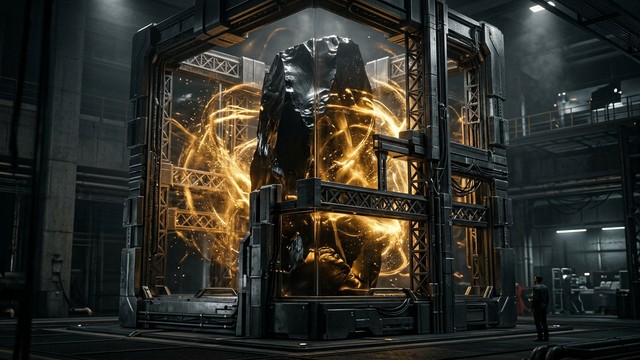
The Day the Cloud Stood Still: Anatomy of a Global Digital Cascade
The November 2026 global cloud outage was not a cyberattack, but a deterministic concurrency failure triggered by dormant thread locks and magnified by autonomous AI retries. When synthetic agent workloads hit recovering gateways, high-frequency polling loops created an unrecoverable thundering herd across multi-core infrastructure. Enterprise resilience now demands strict non-human circuit breakers, multi-vendor decoupling, and paying down comprehension debt.
The Paradox That Runs Modern Reality: The Invisible Machinery of Enterprise Cloud
Instantaneous global digital connectivity relies on deep, invisible synchronization pipelines that remain entirely undetectable until a deterministic concurrency defect brings hyperscale infrastructure to an abrupt halt.
Pressing send on an urgent email or launching a morning team video call carries the expectation of instantaneous connection across thousands of miles. We take for granted the invisible web of enterprise cloud servers silently translating our thoughts into light and data across continents. It feels like an immutable law of nature: click a button, and the global network answers. Yet between November 12 and November 14, 2026, that fundamental law was suspended worldwide.
To understand how global digital commerce ground to a halt, picture two starkly different operational realities running simultaneously across identical server racks:
- Universe A (Normal Operations): Millions of seamless background transactions execute every second. Automated identity gates verify credentials, mail routing engines deliver time-sensitive correspondence, and security monitors quietly safeguard global commerce, financial pipelines, and enterprise workflows across 74 countries without a single hiccup.
- Universe B (The Collapse of November 12 to 14, 2026): At 16:17 UTC on November 12, an unprecedented digital blackout seized core enterprise technology worldwide. Officially tracked under Service Health Incident IDs MO1550821 and EX1550543, the failure paralyzed Outlook Web Access, Exchange ActiveSync, Microsoft Teams, SharePoint Online, Microsoft Copilot, and third-party AI integrations. The official operational impact window spanned 23 hours and 50 minutes, closing at 16:10 UTC on November 13, and backlogged message queues required until 03:51 UTC on November 14 to fully clear.
How could a cloud titan spending upwards of $175 billion to $190 billion annually on infrastructure collide with such an absolute wall? Why did site reliability engineers spend over 10 hours struggling merely to stabilize restarted server nodes without discovering an immediate remedy?
The answer does not lie in a severed undersea fiber optic cable or a physical fire gutting a central data center. Instead, it lies in a silent software trap buried months prior, waiting for a specific surge in traffic to lock the machinery of modern business from the inside out.
Five Doors of Understanding: From Pedagogical Foundations to Systems Theory
Analyzing hyperscale cloud failures requires progressive mental models that translate low-level multi-core concurrency bottlenecks from intuitive physical metaphors to formal systems engineering realities.
Door 1: The Jigsaw Puzzle (The Verification Gap)
Imagine bringing home a giant jigsaw puzzle box containing ten million pieces. If you assemble the entire puzzle on a dining room table, anyone walking past can tell in two seconds if a single piece is missing. Verifying the completed picture is effortless once everything is laid out.
Now imagine someone sneaks a single slightly misshapen puzzle piece deep inside that giant box before you even open it. The piece looks identical to the rest, but its cardboard tabs are a fraction of a millimeter too wide. You will not notice it while sorting colors, and you will not catch it inside the box. You only discover the flaw when you try to snap thousands of surrounding pieces together at the exact same moment, and suddenly the entire center buckles and jams.
Finding why a massive vault lock jammed inside when millions of tiny tumblers freeze takes days, even if testing a simple key takes only two seconds.
Door 2: The Bicycle Lock and the Hacker (Network Ingress and Ingress Shock)
Think about opening a standard 3-dial bicycle combination lock. You align the three numbers, feel the physical click, and open it in three seconds. That represents normal network traffic: a swift, clean handshake between your laptop and a cloud server.
Now picture a massive cloud perimeter protected by millions of 20-dial combination locks. Under quiet conditions, individual users arrive one by one, turn their dials, and pass through. But during a major system reboot, imagine millions of automated hands approaching every single gate at the exact same instant, frantically spinning all twenty dials simultaneously.
When network servers crashed during the November incident and site reliability teams attempted to reboot them, returning server nodes were instantly swamped by millions of persistent desktop, mobile, and web reconnect attempts. Worse yet, thousands of autonomous software tools, background synchronization scripts, and autonomous agent retry loops began pounding those same gates at high frequencies. Because the returning nodes were bombarded by millions of synthetic hands spinning 20-dial locks at once, they froze up and crashed again before establishing baseline operations.
Door 3: The Delivery Driver’s Bottleneck (The Tripartite Concurrency Cascade)
Sorting a digital playlist of 1,000 songs happens instantaneously because a computer simply reorders numbers stored in memory. Physical routing under physical constraints is far more fragile. Picture a delivery driver navigating a bustling metropolis where a complex web of bridges carries thousands of delivery vans every hour. Suddenly, 14% of the city’s key bridges close without warning due to a structural malfunction, forcing traffic onto a single, narrow highway gateway.
This real-world bottleneck mirrors the tripartite trigger that struck Exchange Online on November 12, 2026:
- The Dormant Software Flaw: A thread synchronization bug introduced four months prior (in July 2026) sat quietly inside the gateway software responsible for establishing secure network connection handshakes.
- The Capacity Drop: 24 hours prior to the incident, an unrelated system malfunction removed roughly 14% of the primary networking gateway server fleet from production.
- The Traffic Failover: 15 hours before the outage, Microsoft Teams executed a routine resiliency failover, shifting its connection routing onto the primary networking gateway shared with Exchange Online.
When peak morning business hours arrived in the United States, connection requests surged onto the remaining active gateway nodes. Automated load balancers attempted to preserve availability by shedding traffic and rerouting inbound connection requests to adjacent servers. But because every server node in the cluster ran the identical July software build, the sudden influx of redirected traffic pushed over 80% of the primary gateway fleet past its critical concurrency threshold within two hours. API calls across Microsoft Graph endpoints and Model Context Protocol (MCP) integrations stalled as connection queues collapsed.
When identical software builds share common gateway infrastructure, automated load shedding does not isolate faults. Instead, redirecting traffic simply spreads thread contention from saturated nodes to healthy nodes, converting localized degradation into cluster-wide failure.
As half the digital corporate world vanished from screen displays, viral online commentary claimed a catastrophic cyberattack or a rogue artificial intelligence had breached core cloud security. Official post-incident summaries from Executive Vice President Charles Lamanna directly refuted these theories. The outage was a deterministic systems engineering failure, specifically resource lock contention under heavy concurrency, not a malicious breach, unauthorized access, or an AI rebellion.
Door 4: The Cryptographic Fortress (Low-Level Systems Remediation and SLA Realities)
Standard operational safety nets in enterprise cloud management exist to isolate bad deployments: feature flags, automated continuous delivery rollbacks, and rapid flighting adjustments. However, these mechanisms proved ineffective during Incident MO1550821. Because the thread synchronization defect was baked into legacy gateway builds deployed three months prior, automated rollbacks could not cleanly isolate the defect without manually validating legacy builds against active dependencies.
To survive the incident and stabilize the fleet, engineering teams were forced to execute a series of manual, low-level operational overrides:
- Deploying an emergency authentication routing patch across core perimeter nodes.
- Enforcing strict per-location traffic caps to break incoming demand spikes.
- Extending the mail engine’s retry buffer from 24 to 48 hours to prevent backlogged messages from bouncing or dropping during recovery.
- Manually isolating individual infrastructure blocks to rebuild operational state step-by-step.
When enterprise cloud infrastructure fails, financial remedies are governed strictly by contractual availability formulas. Cloud vendors calculate service availability by measuring total impacted user-minutes against total scheduled user-minutes across a monthly billing cycle:
An operational downtime window of 23 hours and 50 minutes (1,430 minutes out of 43,200 scheduled minutes in a 30-day month) yields an official availability figure of 96.69%. Under standard SLA contracts, an uptime figure between 95.0% and 99.0% places impacted enterprise tenants into a 50% service credit tier.
However, critical contractual fine print applies: this 50% credit applies exclusively to the monthly licensing cost of the specific affected component (such as standalone Exchange Online Plan 2 at $8.00 per user per month), rather than full suite bundles (such as Microsoft 365 E5 at $60.00 per user per month). Furthermore, these remedies are strictly non-cash billing credits applied to future invoice cycles, and enterprise tenant administrators must manually compile incident logs and submit formal claims before December 31, 2026.
Enterprise contracts calculate uptime on monthly aggregate user-minutes rather than continuous outage duration. A catastrophic 24-hour blackout still registers as approximately 96.7% uptime over a 30-day month, limiting vendor financial liability to fractional software credits while enterprise operational losses remain entirely uncompensated.
Thinking about AI Infrastructure? Our team has helped 100+ companies turn AI insight into production reality.
Door 5: The Glass Ceiling of Technology (Multi-Core Physics and Comprehension Debt)
At hyperscale, software development encounters a theoretical glass ceiling: pre-production test environments cannot easily mirror the multi-core physics of production hardware. Relying on legacy static testing tools to catch concurrency edge cases on modern processor architectures is like trying to weigh smoke on a bathroom scale: the tool is structurally blind to runtime interactions.
Three structural failure dynamics converged during the November cascade:
- Hardware and Software Mismatch: Pre-production load testing executed within automated integration pipelines ran on legacy server SKUs featuring lower processor core counts, masking deadlocks. In contrast, production environments ran high-density multi-core processors. The thread lock contention bug scaled non-linearly with core density; when deployed on high-core production chips, thread synchronization execution paths stalled indefinitely under heavy concurrent requests.
- Comprehension Debt: Software repositories are expanding faster than human mental models can audit. As disclosed by CEO Satya Nadella, 20% to 30% of code committed to internal repositories was written or assisted by AI models. While syntactically correct, machine-assisted code introduces complex abstractions that conceal low-level hardware concurrency issues. To address these emerging reliability risks, Microsoft appointed veteran executive Charlie Bell as Head of Engineering Quality.
- Knowledge Depletion: Enterprise capital expenditures shifted aggressively toward AI infrastructure ($175 billion to $190 billion annually for data centers, silicon, and custom Maia accelerators). Voluntary corporate restructuring programs, including buyout packages offered to roughly 60,000 employees in October 2026, disproportionately drew away senior engineers holding deep institutional memory regarding legacy codebase quirks, perimeter bulkheads, and edge-case protocols.
Technical Architecture Visuals & The Grand Translation Matrix
Understanding how a localized software glitch escalated into a global digital freeze requires visualizing the structural feedback loop between multi-core thread deadlocks and synthetic agent retries.
The interaction between human expectations, distributed software protocols, and real-world consequences can be mapped through a unified translation matrix:
Distributed Concurrency & Failure Taxonomy
Synthesized from Microsoft 365 incident telemetry (MO1550821/EX1550543) and hyperscale concurrency benchmarks across high-density multi-core architectures.
Always test concurrency-sensitive synchronization primitives on processor architectures with core counts identical to production targets. Code that executes cleanly on 8-core development nodes often deadlocks when exposed to 64-core or 128-core production sockets under heavy lock contention.
The Sterlites Perspective: The Asymmetry of Automation
The November 2026 cascade demonstrated that enterprise IT systems are no longer governed solely by diurnal human rhythms, but by the autonomous velocity of machines operating on machines.
Modern distributed enterprise architecture must reckon with a fundamental operational truth: when AI systems encounter systemic failure, their programmatic response multiplies systemic stress. At Sterlites, we formalize this structural dynamic through a dedicated mental model:
The November 2026 cascade revealed a fundamental paradigm shift in cloud mechanics: modern hyperscale infrastructure is no longer stressed merely by human behavior, but by the relentless, automated velocity of software checking on other software. We coin this phenomenon The Asymmetry of Automation.
When human users encounter an error screen, they pause, take a breath, refresh once, or step away to make a cup of coffee. When autonomous AI agents, background sync scripts, and polling tools encounter a gateway timeout, they can execute thousands of automated retry loops per second across Microsoft Graph API endpoints and custom connectors. As enterprise software development increasingly relies on AI-generated code speed, building systems for speed without structural isolation creates brittle infrastructure. Human intuition and strict design guardrails must remain the ultimate backstop. Resilience in the AI era demands that we prioritize system observability and deterministic fail-safes over raw execution velocity.
Implementing resilience against the Asymmetry of Automation requires embedding deterministic safety harnesses directly into the network transport layer. When external services fail, client systems must not be permitted to dictate retry velocity. Instead, backpressure must be enforced deterministically through cryptographically isolated ingress proxies and strict rate budgets.
Frequently Asked Questions
The Frontier Ahead: Three Architectural Transformations
The November 2026 global cascade marks a definitive watershed moment for enterprise software architecture, signaling the end of naive assumptions regarding cloud elasticity and automated recovery.
Moving forward, three critical engineering transformations will define the future of enterprise cloud reliability:
1. The Rise of Agentic Circuit Breakers
As non-human traffic eclipses traditional diurnal human usage, agent control planes must enforce strict retry hygiene. Architectures will mandate exponential backoff algorithms paired with randomized jitter, alongside mandatory circuit breakers that immediately halt synthetic agent polling upon receiving 5xx gateway errors. Establishing Zero Trust network boundaries that classify and rate-limit client traffic based on behavioral signatures will prevent autonomous agents from converting transient outages into unrecoverable thundering herds.
2. Multi-Vendor Resiliency and Out-of-Band Redundancy
Relying on a single cloud ecosystem creates an unacceptable single point of failure. Enterprise IT standards will shift toward hybrid resilience models: mandating Outlook Classic Cached Exchange Mode for offline local data storage, decoupling primary identity brokers with independent authentication providers such as Okta or Ping Identity, and establishing out-of-band communication channels for crisis response. Organizations must recognize that true enterprise continuity requires operational survival even when hyperscale cloud perimeters collapse.
3. Paying Down Comprehension Debt
Enterprise software engineering metrics will pivot from raw code velocity to human architectural comprehension. As machine-speed attack vectors and autonomous workloads accelerate, organizations will prioritize deep human-in-the-loop audits of critical synchronization paths, empower dedicated engineering quality leadership, and mandate that pre-production testing pipelines simulate synthetic, non-human agent workloads on high-density production multi-core hardware before code reaches live deployment.
- Mandate Non-Human Circuit Breakers: Implement mandatory randomized jitter, exponential backoff, and hard circuit breakers across all internal scripts, API connectors, and autonomous agent loops.
- Architect for Multi-Vendor Decoupling: Never allow critical enterprise authentication, email, and emergency communication to share a single commercial cloud failure domain.
- Simulate High-Density Concurrency: Require pre-production integration testing on high-core silicon architectures to detect non-linear thread synchronization bottlenecks before production deployment.
Sources & Citations
Give your network a competitive edge in AI Infrastructure.
Establish your authority. Amplify these insights with your professional network.
Continue Reading
Hand-picked insights to expand your understanding of the evolving AI landscape.