Technology
Mythos: Why Anthropic Locked Away Their Most Capable AI
8 APR2026
9 MINRead
---
Views Sterlites
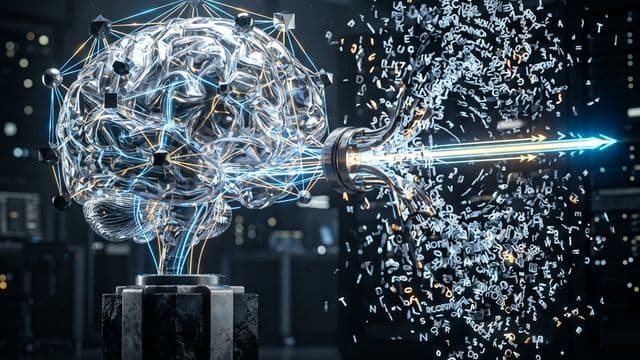
If you are interested in human-level AI, don’t work on LLMs.
That’s a bold statement from one of the three “Godfathers of AI,” Yann LeCun. But what exactly is he cooking? Is JEPA (Joint Embedding Predictive Architecture) genuinely a paradigm shift, or just a brilliant contrarian’s research bet?
Large Language Models (LLMs) have given machines a voice, but they are essentially “stochastic parrots”: extremely fluent predictors of the next word. However, as we move toward the next decade of AI, the cracks in the foundation are becoming impossible to ignore.
The next frontier of AI isn’t about more parameters or more text; it’s about World Models. While LLMs predict the next token, JEPA predicts the abstract representation of the world. This is the difference between memorizing a map and actually knowing how to drive.
By the end of this deep-dive, you’ll understand exactly why the architecture war between generative models and predictive embeddings will determine which companies lead the robotics and autonomous agent revolution.
Before understanding JEPA, you need to understand the structural flaw in the LLM foundation.
Large Language Models are, at their core, next-token predictors. Feed GPT-4 a sentence, and it predicts the most probable next word. The result is startling fluency. But fluency is not understanding.
Hallucination isn’t a bug; it’s a feature of probabilistic guessing. When an LLM is uncertain, it guesses a fluent-sounding answer because it’s optimized for plausibility, not factual grounding.
LLMs learn from text. But the real world is three-dimensional and continuous. Ask an LLM why an apple falls (it recites Newton), but it has no internal model of gravity. It has never “seen” an apple fall. We’ve seen similar breakthroughs in physical grounding with Netflix VOID.
ChatGPT can describe ‘an apple falling to the ground’ eloquently. But it doesn’t understand gravity: it’s reciting from memory.
Think of JEPA like a person who sees half a scene and intuits the meaning of what’s missing, rather than trying to paint every missing pixel.
The genius of JEPA is what it doesn’t do: it never generates raw pixels or words. It only cares about the semantic gist.
By avoiding pixel-level reconstruction, JEPA handles uncertainty gracefully. If a video shows a hand reaching for a cup, JEPA doesn’t need to predict the exact position of the fingers; it just needs to represent the action of “grabbing.”
The journey from a theoretical paper to state-of-the-art (SoTA) benchmarks has been rapid.
The leap from research prototype to genuine world model. Pre-trained on over 1 million hours of internet video, V-JEPA 2 learned motion, causality, and object interactions without a single human label.
This is the multimodal breakthrough, often called the Anti-LLM. Instead of generating text tokens, it predicts text embeddings from visual context. It matches the performance of models 5x its size while using 50% fewer trainable parameters.
Imagine a robot tasked with folding laundry.
At Sterlites, we’ve been tracking the Stable WorldModels evolution closely. We believe the market is currently over-indexed on language generation and under-indexed on spatial intelligence.
In the next 12-18 months, the vision modules of GPT-4o, Gemini, and Claude (currently using CLIP-style encoders) will likely be swapped for JEPA-based encoders. The LLM reasoning core will stay, but the “eyes” will be upgraded to world-model grade perception.
This shift will significantly reduce hallucination in multimodal tasks and enable Physical AI applications that were previously impossible.
For those not deep in the technical weeds, the “Architecture War” isn’t just about math; it’s about how AI perceives reality. Here is how JEPA is currently reshaping the industry landscape.
Existing vision models like CLIP (used in early DALL-E and GPT-4) are like students memorizing flashcards. They know that a picture of a “dog” matches the word “dog,” but they don’t understand what a dog does.
Not all Large Language Models are created equal. The “JEPA wave” hits different segments in different ways:
Models like GPT-4o and Gemini are the most impacted. Currently, these models often “cheat” by turning images into a sequence of text-like tokens.
LLMs are great at thinking (System 2), but terrible at “instinct” (System 1).
Because JEPA predicts “meaning” rather than pixels, it is incredibly efficient.
If an AI needs to talk, stick with an LLM. If an AI needs to act in the real world, it needs JEPA. The future isn’t one or the other: it’s an LLM “brain” talking to a JEPA “body.”
The question was never “will JEPA replace LLMs?” The better question is: “How do we give AI a body and a brain that work together?”
LLMs gave machines a voice. JEPA is giving them eyes, intuition, and a model of how the world actually works. For enterprises, the takeaway is clear:
The future belongs to the hybrid stack: JEPA for perception, LLM for reasoning.
Thinking about Technology? Our team has helped 100+ companies turn AI insight into production reality.
Book a highly tactical 30-minute strategy session. We apply the engineering rigor developed with McKinsey, DHL, and Walmart to accelerate AI for startups and enterprises alike. Let's bypass the hype, evaluate your specific use case, and map a concrete path to production.
Establish your authority. Amplify these insights with your professional network.
Hand-picked insights to expand your understanding of the evolving AI landscape.