Technology
JEPA vs LLMs: The Architecture War That Will Define the Next Decade of AI
22 APR2026
10 MINRead
---
Views Sterlites

Magnus Carlsen represents the pinnacle of human cognitive adaptation, yet compared to even a modest chess engine, he is objectively incompetent. This is our “Evolutionary Blindspot”: humans feel general only because we are biologically incapable of perceiving the vast Universal Task Space where we have zero leverage. At Sterlites, we believe the industry’s fixation on Artificial General Intelligence (AGI) is a romantic distraction that ignores the reality that the most powerful intelligence is not general, but profoundly specialized.
By the end of this guide, you will know exactly which structural decisions cost enterprises the most time, and how deploying hyper-specialized agentic models is the only path to defensible value.
The AI that folds your proteins should not be the AI that folds your laundry. At Sterlites, we believe the obsession with “General” AI is a romantic distraction; the future belongs to modular, superhuman specialists coordinated by a central world model.
Imagine trying to build a bridge where the blueprints change every time you pour concrete. That is the reality of chasing Artificial General Intelligence (AGI), an overloaded term that describes software mimicking broad human cognitive capabilities. Think of AGI goals like a mirage: a destination that appears to shift every time we automate a specific human capability.
Current definitions fail three critical tests: Feasibility, Consistency, and Assessability. OpenAI’s definition fails the “Assessability” test because it benchmarks against “economically valuable work,” an ever-growing target that provides no fixed metric for progress. Definitions from Hendrycks and DeepMind fail the “Consistency” test. They act as “Cognitive Mirrors” that set the bar unnecessarily low by mimicking human versatility, a trait that is not actually general.
In your boardroom, this ambiguity creates a polarized narrative that stalls execution. If our benchmark is merely “human-level,” we are effectively designing for our own limitations. The true danger lies in ignoring what makes machine intelligence fundamentally different from our own.
Imagine navigating a pitch-black cave. A bat does this effortlessly with echolocation, while a human is completely helpless. Human intelligence is not general; it is a specialized evolutionary toolset optimized for survival. We evolved to excel at a narrow sliver of tasks (social planning, locomotion, and spatial reasoning) because those traits kept our ancestors alive.
Think of human intelligence like a Swiss Army knife: it is perfect for a campsite but entirely useless for building a skyscraper. This disconnect is defined by Moravec’s Paradox. Moravec’s Paradox is the observation that tasks we find easy (like walking through a room) are hard for computers, while tasks we find hard (like high-dimensional statistical inference) are trivial for machines. Specialization is not a limitation; it is a superpower.
A structural diagram showing the Universal Task Space, highlighting the overlap and gaps between Human Domain and AI Domain capabilities.
Consider a decathlete versus an Olympic Sprinter: the decathlete is versatile, but they will never beat a specialist in a 100m dash. Specialized AI outperforms generalists because it avoids “Negative Transfer” (where learning unrelated tasks degrades a model’s accuracy) and concentrates computational energy on specific target distributions. The mathematical “No Free Lunch” theorem dictates that no single algorithmic approach can perform optimally across every possible problem.
To gain elite performance in one niche, a system requires assumptions that make it less effective elsewhere.
The assumption that a single, massive neural network can conquer all domains simultaneously violates fundamental operational principles. Generality is a parlor trick; specialized precision is what creates economic defensibility.
In the AI world, AlphaFold is the specialist. By targeting protein structure prediction directly, it achieved results a general large language model could never match.
What This Looks Like in Practice: In a business context, Negative Transfer is like a manager trying to run ten unrelated departments simultaneously. The conflicting responsibilities lead to errors in one area bleeding into another. When an enterprise forces a single model to review legal contracts, generate marketing copy, and forecast revenue, the model’s precision drops across all three tasks. Trying to “do everything” results in doing nothing with the reliability required for positive ROI.
But how do we effectively manage and coordinate these hyper-specialized systems?
To navigate this landscape, we implement the Sterlites Adaptive Velocity Framework, a system centered entirely on Superhuman Adaptable Intelligence (SAI). Instead of measuring isolated capabilities, the framework measures adaptation speed.
SAI is defined as intelligence that can learn to exceed humans at anything important we can do, emphatically including filling the gaps where humans are biologically incapable. Rather than checking off a fixed list of human skills, the primary metric for SAI is Adaptation Speed (how quickly and efficiently a model acquires a new, high-utility skill). We are moving the goalposts from static performance to the velocity of specialization.
Pivot your enterprise investment from generic chat models to high-velocity adaptive specialists. Eliminate negative transfer risks and measure progress using Adaptation Speed instead of static performance benchmarks.
Imagine memorizing a map of a city versus actually understanding its traffic patterns and shortcuts. SAI is powered by World Models and Self-Supervised Learning (SSL), approaches that prioritize learning underlying structures over mere token memorization. While current generative models act like parrots memorizing a dictionary, World Models act as architects who understand the laws of physics.
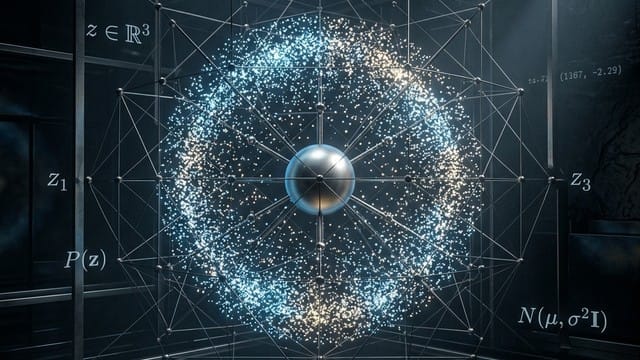
We advocate for Latent Space Prediction, seen in architectures like JEPA or Dreamer. Think of a “Latent Space” like a compressed summary that ignores surface noise to focus strictly on core dynamics. This deep structural understanding enables “Zero-shot task transfer” (the ability to adapt to a newly introduced workflow without needing massive labeled datasets). As autoregressive errors diverge exponentially over time, moving beyond simple token-level prediction prevents enterprise tools from becoming brittle during long-horizon planning.
The era of simply chatting with bots is over; the era of deploying specialized World Models is here. To remain competitive over the next 12 months, organizations must stop chasing the ghost of Generality and start building for architectural Adaptability.
Thinking about AI Strategy? Our team has helped 100+ companies turn AI insight into production reality.
Book a highly tactical 30-minute strategy session. We apply the engineering rigor developed with McKinsey, DHL, and Walmart to accelerate AI for startups and enterprises alike. Let's bypass the hype, evaluate your specific use case, and map a concrete path to production.
Establish your authority. Amplify these insights with your professional network.
Hand-picked insights to expand your understanding of the evolving AI landscape.